
- Why there are no cars
- On foot
- By bicycle
- Electric scooters and e-bikes
- The horse carts: an honest account
- Luggage: from boat to bed
- Getting around on Lombok
Why there are no cars
Motorised vehicles have been banned on the Gilis by local regulation for decades. The ban began as a community decision to keep the islands quiet and was later written into local rules; it applies to petrol cars, vans and motorcycles alike. The result is rare anywhere in the world: beach islands where the loudest traffic noise is a bicycle bell.
The islands are small enough to make this work. Trawangan is about seven kilometres around, Meno and Air about five. Nothing is more than half an hour’s walk from anything else.
| Way of getting around | Trawangan | Meno | Air | Notes |
|---|---|---|---|---|
| Walking | Fine in the east; long to the far west | Ideal — the whole island | Ideal | Carry a torch after dark |
| Bicycle | The best way to explore | Hardly needed; sandy | Useful; sandy in the west and north | Rent by the day; check brakes and tyres |
| Electric scooter / e-bike | Increasingly available | Rare | Common among residents; some rental | Ride slowly; lanes are shared |
| Horse cart (cidomo) | Many, at the harbour | A few | Several, at the harbour | Welfare concerns — read below |
| Hotel porter, handcart or buggy | Offered by many resorts | Offered by most resorts | Offered by some hotels | Ask when you book |
| Boat | Beach drop-offs by charter | Beach drop-offs by charter | Beach drop-offs by charter | Often the easiest way to move luggage |
On foot
Walking is how most people get around most of the time. The main lanes are paved or hard-packed in the busy areas and soft sand elsewhere. A full circuit takes about two hours on Trawangan and an hour and a half on Meno or Air, not counting swims.
- Wear sandals rather than flip-flops for longer walks; sand gets hot at midday.
- There is little street lighting. Carry a torch at night and keep to the edge of the lane.
- Shade is scarce on north coasts. Walk early or late and take water.
By bicycle
Bicycles are rented everywhere on Trawangan and Air, by the hour or the day, and many hotels provide them free. They are single-speed beach cruisers of varying quality.
- Check before you pay: brakes, tyre pressure, saddle height, a working lock and, ideally, a light.
- Expect to push through stretches of deep sand, especially in the north of Trawangan and the west of Air.
- Ride on the left, give way to pedestrians and carts, and slow right down on the main strip.
- Lock it and note which one is yours — they all look alike.
- Do not ride after drinking. Night-time bicycle falls are among the commonest tourist injuries.
Children’s bikes and child seats exist but are limited; ask a few shops.
Electric scooters and e-bikes
Battery-powered scooters and bicycles have multiplied on Trawangan and Air in recent years. Strictly speaking they sit in a grey area of a ban written for petrol engines, and local rules about who may ride and rent them have changed more than once. Residents and businesses use them widely; visitors can rent them at some shops, and several resorts run electric buggies for guests and luggage.
They are a real improvement for moving goods and people without horses. They are also fast and silent on lanes built for feet. If you ride one, go at walking pace wherever there are people, use the bell, and stay off the beach.
The horse carts: an honest account
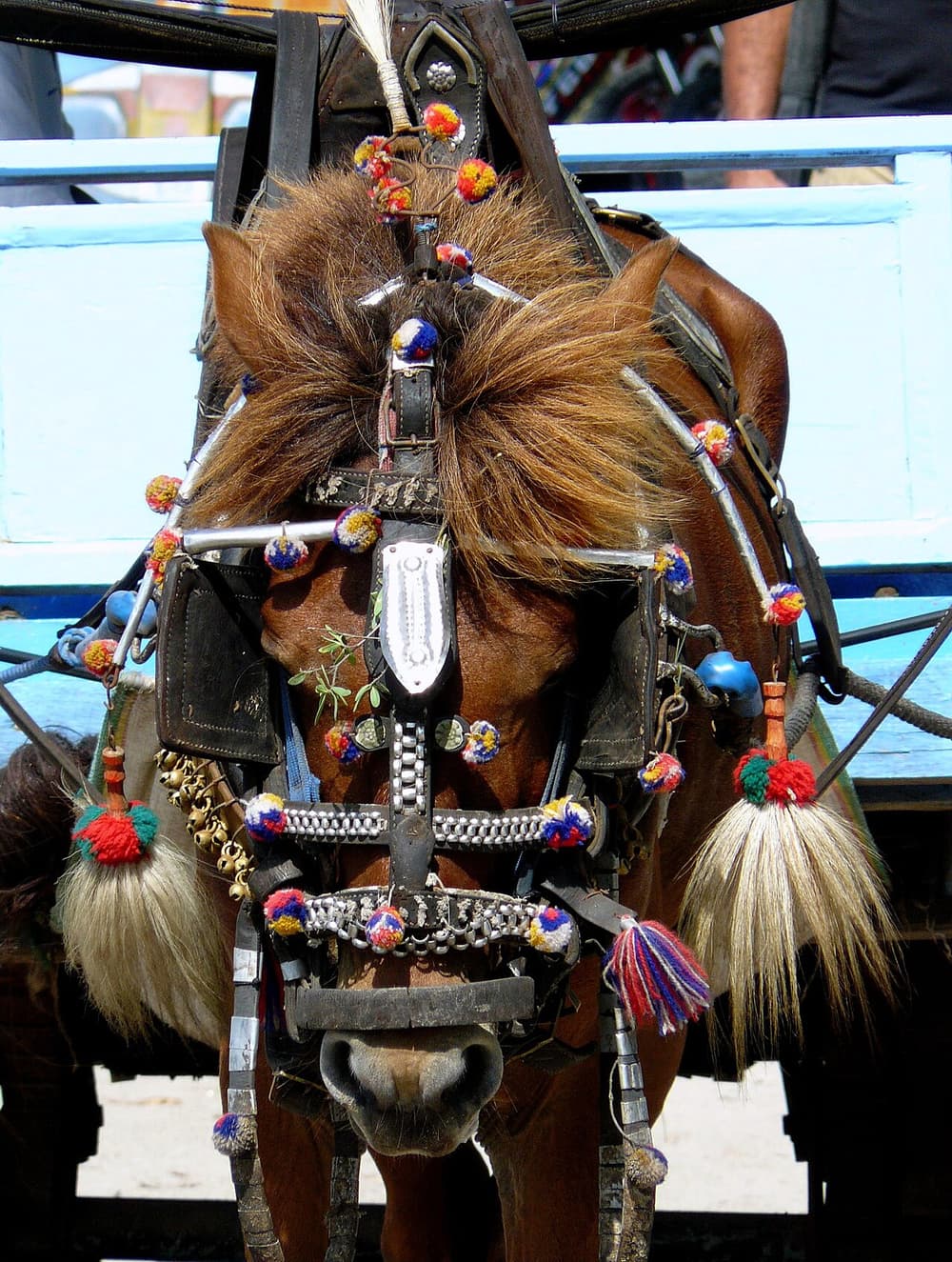
The cidomo is the islands’ traditional taxi and freight wagon: a small two-wheeled cart on car tyres, drawn by a single pony, with bells on the harness. With no motor vehicles, cidomos have long carried tourists, luggage, building materials, beer crates and rubbish. They are part of the islands’ identity and an important livelihood for the families who own them.
They are also the subject of sustained, well-documented animal-welfare concern. Visitors, vets and animal charities have reported, over many years:
- ponies working long hours in tropical heat with little rest or shade;
- overloading, particularly on carts hauling construction materials and goods;
- inadequate access to fresh water — the islands’ groundwater is brackish, and horses given salty water become dehydrated;
- ill-fitting harnesses and bits causing sores and mouth injuries;
- hoof problems, lameness and animals worked while visibly thin or injured.
There has been real effort to improve things. Local organisations, including the Gili Eco Trust and horse-welfare groups working with visiting vets and farriers, run free clinics, provide fresh-water stations, teach hoof care and harness fitting, and work with drivers’ cooperatives on standards. Many drivers look after their animals conscientiously, and conditions for the tourist “taxi” ponies are generally better than for the freight horses. But standards remain uneven, enforcement is weak, and problems are still easy to see.
So should you take one?
That is your decision. Here is ours: we do not use them when there is an alternative, and there almost always is. The islands are small. With a backpack, you can walk. With a suitcase, most hotels will send a porter with a handcart or an electric buggy if asked in advance, or a chartered boat can land you on the beach outside. We do not feature horse-cart or horse-riding tours on this site.
If you do need a cidomo — because of mobility, heat, small children or heavy bags and no other option — you can still choose well:
- Look at the horse first. Choose one that is well-covered, bright-eyed, standing square and free of sores under the harness. Walk past any that is thin, lame, lathered or has open wounds.
- Do not overload. Two or three adults with bags is plenty. Take two carts if you are a group.
- Avoid the midday heat where you can.
- Ask the driver to walk, not trot, and do not accept whipping.
- Agree the fare before you get in. Prices are high for the distance; that is normal. Paying fairly without haggling to the floor leaves the owner more to spend on the animal.
- Report cruelty. Tell your hotel and the local welfare groups, with a photo and the cart number.
You can also help directly: the welfare clinics run on donations and welcome volunteers with veterinary or farriery skills.
Luggage: from boat to bed
Arriving is the one moment when getting around takes thought.
- Before you travel, ask your accommodation how far it is from the harbour and whether it offers a pick-up. Share your boat’s name and expected arrival time.
- Pack for sand. Wheels are useless off the paved strip. A backpack is ideal.
- On Trawangan, hotels on the west and north coasts are 20–30 minutes’ walk from the boats. Arrange a buggy or porter, rent a bike with a rack, or charter a small boat round.
- On Meno, the west-coast resorts are about ten minutes’ walk across the island; most meet their guests.
- On Air, almost everything is within 15–20 minutes of the jetty.
Getting around on Lombok
The mainland is another world: cars, scooters, trucks and hills. For touring, a car with driver is the usual and best option; scooters are widely rented but should be ridden only by licensed, insured and experienced riders with helmets. Details are in our guides to Senggigi & the harbours and Kuta Lombok. For the boats between the three islands, see island-hopping.