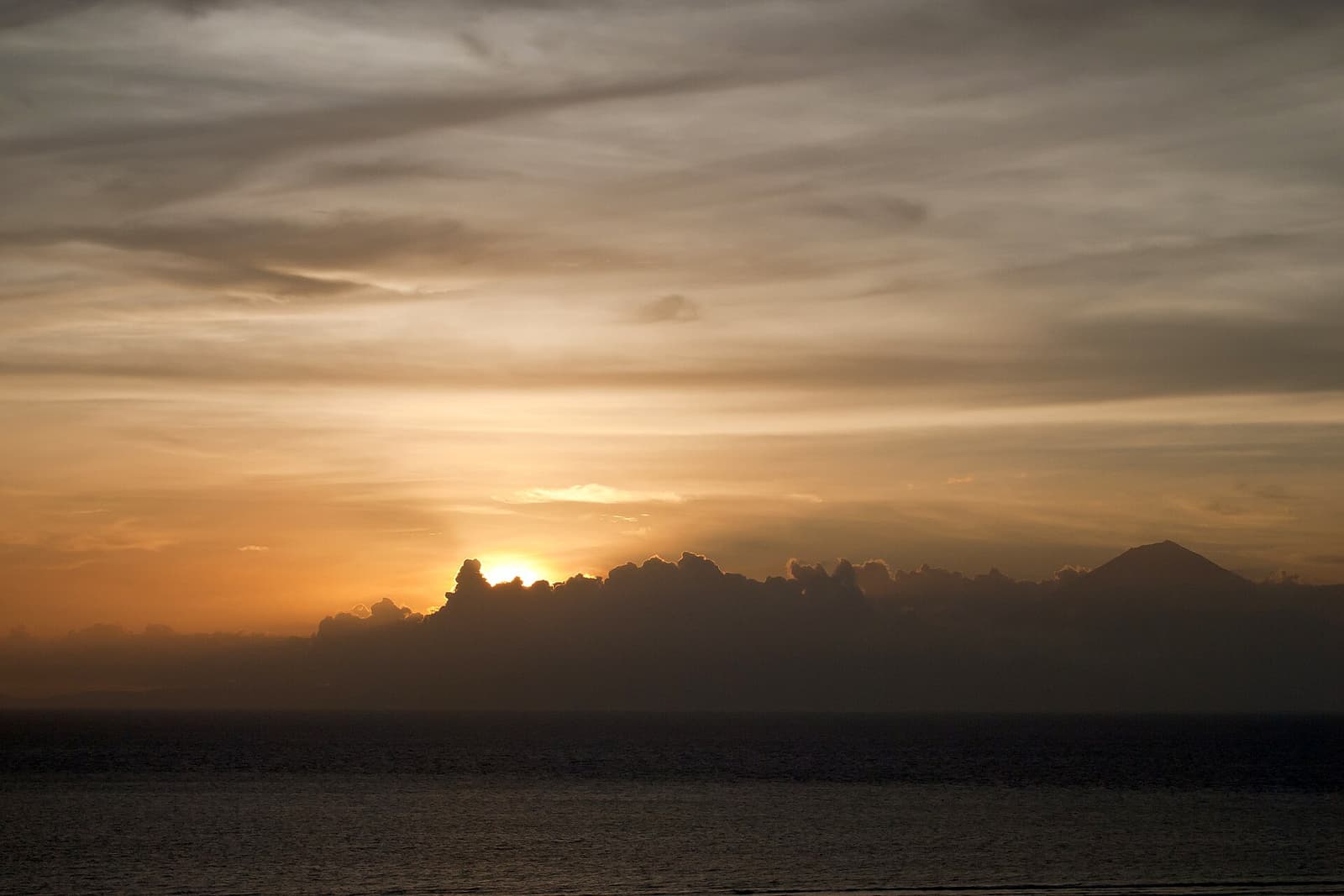
- The short answer
- Month by month
- Dry season: May to October
- Wet season: November to April
- Diving, snorkelling and surf seasons
- Ramadan and Eid on the Gilis
- Nyepi: Bali’s Day of Silence
- Other dates worth knowing
The short answer
- Best overall: May, June and September — dry, calm, clear and not crowded.
- Busiest and dearest: July, August and the fortnight around Christmas and New Year.
- Cheapest and quietest: late January to March, and November.
- Riskiest for boat cancellations from Bali: December to February.
- Rinjani trekking: roughly April to December; trails usually closed January to March.
Lying in the rain shadow of Lombok’s mountains, the Gilis are noticeably drier than Bali or the Lombok interior. Even in the wettest months, most days have long sunny spells.
Month by month
Temperatures are typical daytime highs; the sea stays between about 27 and 30°C all year. “Crossing” refers to fast boats between Bali and the Gilis.
| Month | Weather | Sea & crossing | Crowds & prices | Good for |
|---|---|---|---|---|
| January | Hot, humid, frequent heavy showers; about 31°C | Often rough; cancellations likely | Quiet after the first week; low prices | Bargains, flexible travellers |
| February | Wettest spell, some grey days | Often rough | Very quiet | Solitude; flying via Lombok |
| March | Showers easing; lush and green | Improving; mind Nyepi | Quiet | Value, green scenery |
| April | Mostly dry, warm, about 32°C | Generally calm | Moderate; busy at Easter | Diving, Rinjani opens |
| May | Dry and sunny | Calm | Moderate | Everything — a top month |
| June | Dry, breezy, cooler nights | Calm mornings | Building | Everything — a top month |
| July | Dry, windy afternoons, about 30°C | Choppy afternoons | Peak | Guaranteed sun; book ahead |
| August | Driest month, windy | Choppy afternoons; occasional cancellations | Peak | Sun, Rinjani, surf on Lombok |
| September | Dry, warming up | Calm | Easing | Diving visibility, value |
| October | Hot, first showers late in the month | Calm | Moderate | Warm seas, quiet beaches |
| November | Hot, humid, afternoon storms | Mostly calm, some rough days | Quiet | Low prices, manta season nearby |
| December | Showery; busy festive weeks | Rough spells begin | Quiet, then peak from about 20 December | Festive atmosphere |
Each destination has its own table of temperatures, rainfall and crowds on its “when to go” page — for example Gili Trawangan, Gili Air and Mount Rinjani.
Dry season: May to October
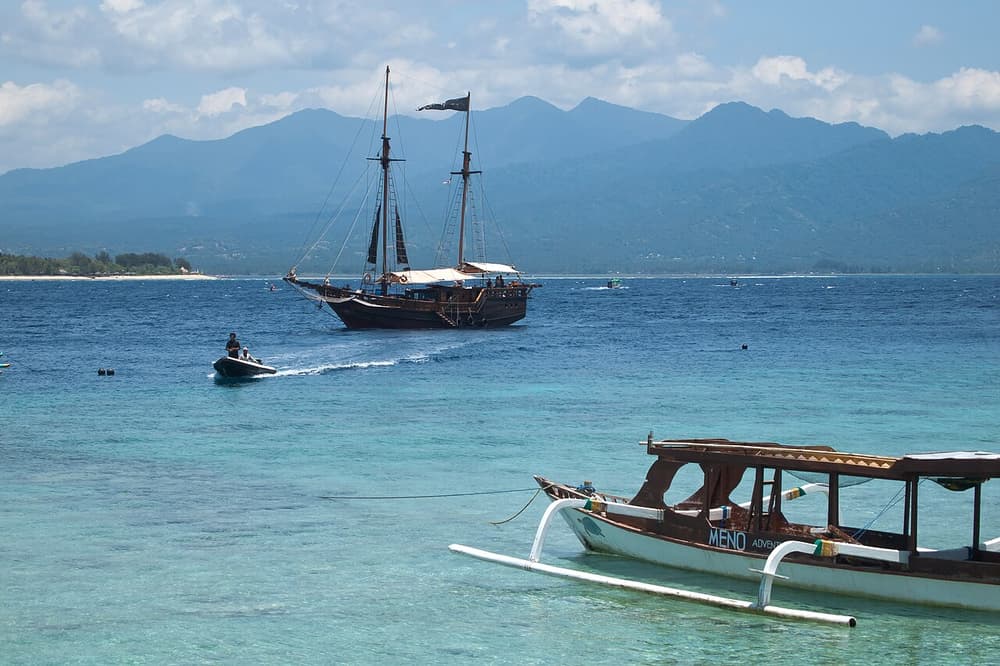
South-easterly trade winds bring dry air from Australia. Skies are blue, humidity drops, and from June to August nights are pleasantly cool. Rain is rare. The islands turn dusty and brown inland by September, and fresh water is at its scarcest.
Under water this is the season of best visibility, often 20–30 metres. The wind that keeps the days comfortable also raises a chop in the Lombok Strait on July and August afternoons — one more reason to take morning boats.
Wet season: November to April
The north-west monsoon brings heat, humidity and rain, mostly as short, violent downpours in the afternoon or at night. December to February is the wettest and windiest period. Between storms the sun is strong and the sea is warm and often glassy inshore.
The main practical issue is not rain but swell in the Lombok Strait, which can stop fast boats from Bali for a day or several. The short crossing from Lombok is far less affected. Rates are low, beaches are empty, and the islands are green. Some small businesses on Meno and Air close for a few weeks for maintenance.
Diving, snorkelling and surf seasons
- Diving and snorkelling are possible all year. Visibility peaks from about May to November. Plankton in the wet season reduces clarity but can bring more large animals.
- Turtles are resident and seen in every month.
- Reef sharks at Shark Point are seen year-round, best on early dives.
- Manta rays are occasional visitors around the Gilis, mostly in the wet-season months; they are far more reliable at Nusa Penida.
- Surf. Trawangan’s reef break works on larger swells, mainly in the wet season. Lombok’s south coast is best from about May to October.
More in diving & snorkelling.
Ramadan and Eid on the Gilis
The islanders are Muslim, and Ramadan — the month of fasting from dawn to sunset — is observed by the community. It moves about eleven days earlier each year: it fell in February–March in 2026 and will begin in early February in 2027, shifting into January by 2028. Check the exact dates for your year.
What changes for visitors:
- Hotels, dive centres, tourist restaurants and bars operate normally and alcohol is still served.
- Many local warungs close during daylight and open at sunset, when families break the fast — a lovely time to eat local food.
- Loud parties on Trawangan are scaled back or end earlier, by agreement with the village.
- Staff who are fasting may be a little slower in the afternoon heat. Patience is appreciated.
- Out of courtesy, avoid eating, drinking or smoking while walking through village lanes in daylight, and dress a touch more conservatively.
Eid al-Fitr (Lebaran), the festival at the end of Ramadan, is Indonesia’s biggest holiday. For a week either side, flights, ferries and roads are packed with people going home, some island staff are away, and Indonesian families visit the Gilis. Book transport well ahead.
Nyepi: Bali’s Day of Silence
Nyepi is the Balinese Hindu new year, usually in March. For 24 hours from 6 am, the whole of Bali stops: the airport closes, no boats sail, shops shut, lights are dimmed and nobody — visitors included — may leave their accommodation.
The Gili Islands are not Hindu and do not observe Nyepi. Everything is open. That has two consequences:
- You cannot travel to or from Bali on Nyepi itself, so do not plan a crossing or a flight for that day.
- Many travellers leave Bali for the Gilis to avoid the shutdown. Boats are very full the day before and the day after, and island hotels are busier than usual. Book early.
If you are in Bali the evening before, the ogoh-ogoh parades of giant demon effigies are worth seeing. Lombok’s Balinese community holds smaller processions in Mataram.
Other dates worth knowing
- Christmas and New Year (about 20 December–5 January): peak prices, minimum stays, beach parties — and the season of roughest seas.
- Easter and Chinese New Year: short busy spells.
- Indonesian Independence Day (17 August): flags, games and boat races in the villages.
- Bau Nyale (February or March): the sea-worm festival on Lombok’s south coast.
- MotoGP at Mandalika (typically September or October): fills hotels across Lombok for a weekend.
- European and Australian school holidays: the reason July and August are so busy.