- The three ways in
- Fast boats from Bali: departure points
- Operators and how to choose
- Sea conditions and safety
- Fees, levies and what tickets leave out
- From Lombok: Bangsal, Teluk Nara and the public boats
- The budget route: public ferry via Lembar
- Arriving on the islands
- Nyepi, Eid and other dates that stop the boats
The three ways in
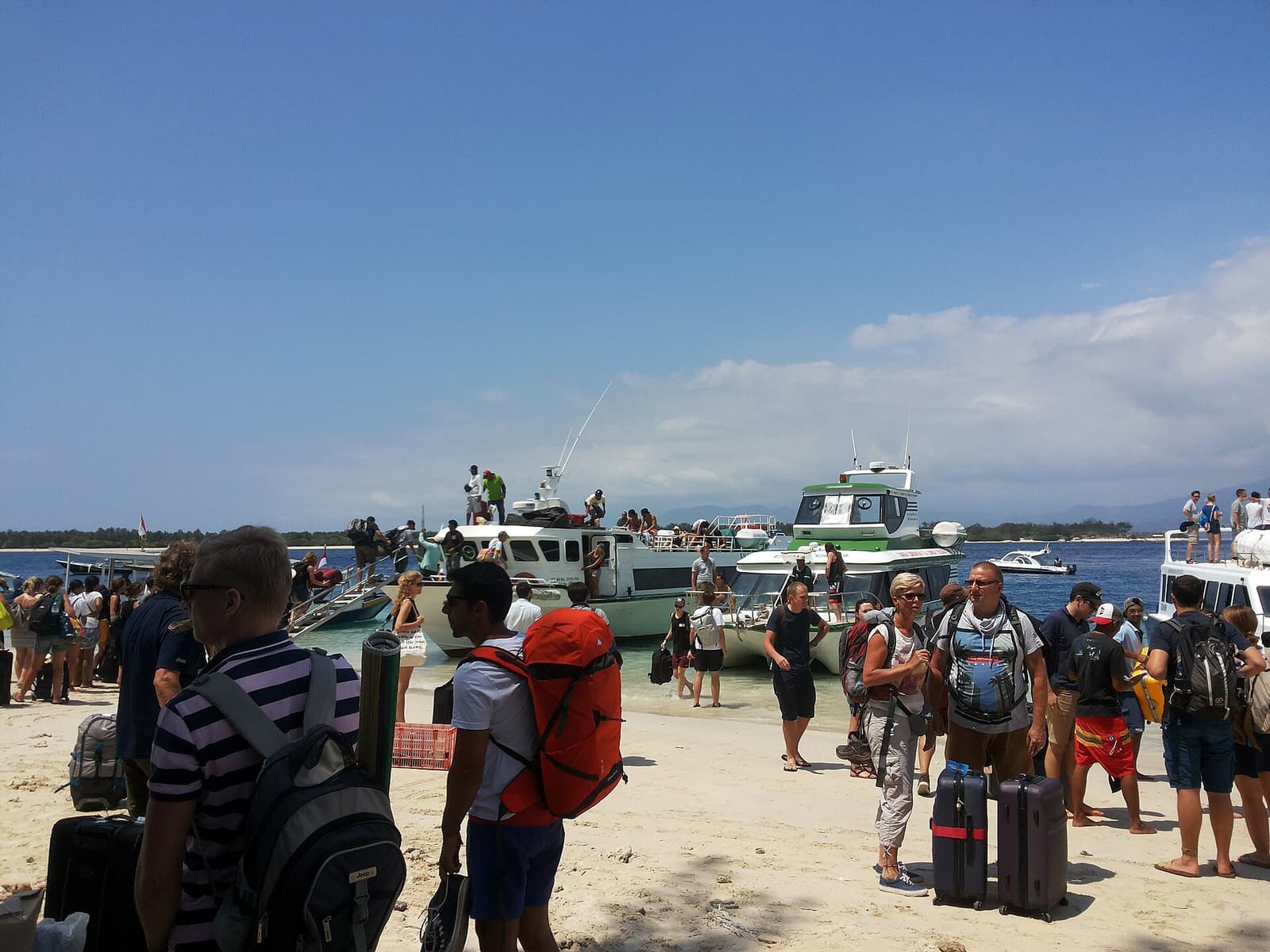
- Fast boat from Bali. The most popular route: 1.5–2.5 hours on the water from Padang Bai, longer from Serangan or Sanur. Convenient, but exposed to the weather.
- Fly to Lombok, then a short boat. A 30–40 minute flight from Bali (or a direct flight from Jakarta and a few international cities), about two hours by road to the harbour, and a 10–15 minute crossing. More reliable in rough-sea months.
- Public ferry and public boat. The slow car ferry from Padang Bai to Lembar and the local boat from Bangsal. The cheapest route by far, taking most of a day.
| Route | Door-to-door time from south Bali | Typical cost | Best when |
|---|---|---|---|
| Fast boat from Padang Bai | About 4–5 hours | From roughly €21–26 one way online; more with transfers | The sea is calm and you want the simplest trip |
| Fast boat from Serangan or Sanur | About 3.5–5 hours | Around €30 and up | You are staying in Sanur, Kuta or Seminyak |
| Fast boat from Amed | About 1.5–2 hours from Amed itself | Usually higher; check | You are already in east Bali |
| Fast boat from Nusa Penida / Lembongan | About 2–2.5 hours from the Nusas | From around €21–28 online | You are island-hopping |
| Flight to Lombok + car + boat | About 4–5 hours | Flight plus roughly €16–40 for car and boat | December–February, or with small children |
| Public ferry + car + public boat | About 8–10 hours | A few euros for the boats plus road transport | Budget travel, motorbikes, or when fast boats are cancelled |
Prices are the lowest shown for the listings we feature in October 2026 and vary by season and operator. Bookable tickets are on our From Bali and Lombok harbours pages.
Fast boats from Bali: departure points
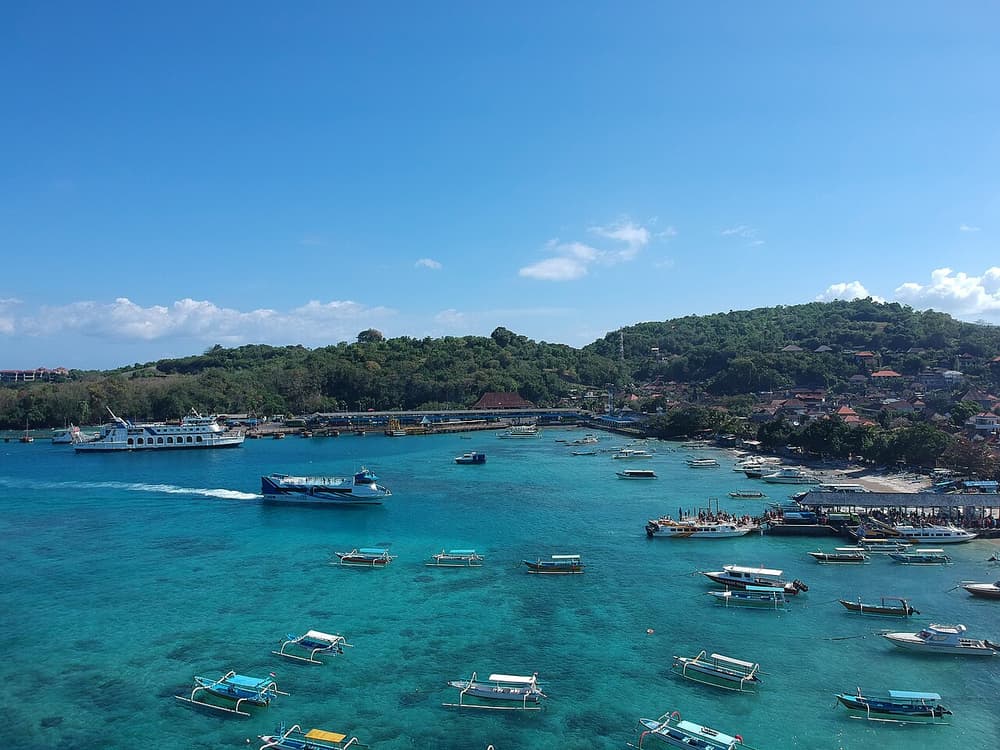
Padang Bai
The main port, on Bali’s east coast. It has the most operators and sailings and the shortest regular crossing. The drawback is the road: 1.5–2 hours from Seminyak, Canggu or Kuta and about an hour or more from Ubud, usually in a shared minibus that leaves around 6–7.30 am.
Serangan
A small harbour near Denpasar, 20–30 minutes from the southern resorts. The sea leg is considerably longer and more exposed.
Sanur
Sanur’s modern terminal mainly serves Nusa Penida and Lembongan; a few boats continue to the Gilis, usually with stops, taking three hours or more.
Amed
From north-east Bali the crossing is the shortest of all, on smaller boats that are more easily stopped by wind.
Nusa Penida and Nusa Lembongan
Direct boats to the Gilis and Lombok usually run once a day. A good way to link the two island groups without returning to Bali.
More on each port, and what to see there, in our From Bali guide.
Operators and how to choose
A dozen or more companies run fast boats on these routes, and the line-up changes from year to year. Names you are likely to meet include BlueWater Express, Eka Jaya, Gili Getaway, Ostina, Wahana, Semaya One and Golden Queen. We do not rank them — standards and schedules shift — but these questions sort good from poor:
- How big is the boat? Larger vessels ride the swell better and have enclosed, air-conditioned cabins.
- Which harbour and which islands? Confirm both. “Gili Islands” on a ticket may mean Trawangan only.
- Is hotel pick-up included, and from which areas?
- What happens if it is cancelled? Look for a clear rebooking or refund policy.
- What do recent reviews say about punctuality and overloading?
The very cheapest street tickets are sometimes resold seats on whichever boat has space. Paying a little more for a named, established operator is money well spent on this stretch of water.
Sea conditions and safety
The Lombok Strait is one of the deepest channels in Indonesia and carries a powerful current between the Pacific and Indian Oceans. In calm weather the crossing is a pleasant ride. When wind and swell build, it becomes rough quickly.
- Roughest months: December to February, when the west monsoon sends swell into the strait. Cancellations of one to three days are not unusual.
- Windy season: July and August, when the south-east trade wind raises a short, steep chop by afternoon.
- Calmest: April to June and September to November, especially in the morning.
The harbourmaster stops all fast boats when waves exceed a set limit. That is a safety measure, not an inconvenience to argue with. There have been serious accidents on this route over the years, including capsizes and fires. Check that life jackets are within reach, sit inside in rough weather, and do not board a boat that looks overloaded. If the forecast is poor, fly to Lombok instead.
Seasickness: take medication 30 minutes before departure, sit low and aft, and watch the horizon.
Fees, levies and what tickets leave out
- Harbour fee in Bali. Padang Bai and other ports charge a small passenger fee, paid in cash at a booth before boarding.
- Arrival fee in the Gilis. A small local tourist or harbour fee is commonly collected when you land, again in cash.
- Bali tourist levy. International visitors to Bali pay a one-off levy, online or on arrival. It applies if you enter Bali; it is not a Gili charge.
- Porters. Men who carry your bag on or off a boat expect a tip. If you do not want the service, hold on to your bag and say so clearly.
We do not quote the amounts because they change, but each is small — think of the price of a drink. Carry low-denomination rupiah notes, ask for a receipt, and if a figure sounds inflated ask to see the posted tariff.
From Lombok: Bangsal, Teluk Nara and the public boats
Lombok’s airport (LOP) is in the south of the island, about two hours by road from the Gili harbours. Fixed-fare taxis and pre-booked cars wait outside arrivals.
Bangsal: how it works
Bangsal is the public harbour, and its reputation for touts precedes it. The reality is manageable:
- Vehicles must stop at a barrier several hundred metres from the sea. Walk straight on towards the water — it takes five to ten minutes. Horse carts offer the ride; you do not need one unless your luggage is very heavy.
- Ignore everyone on the way who tells you the office is closed, the boat is full, or that you need to buy mosquito coils, water or a “special” ticket.
- At the seafront, find the official ticket office of the boatmen’s cooperative. Fares are fixed and displayed.
- Public boats leave when they have a full load — quickly in the morning, slowly in the afternoon — and cost very little. Shared speedboats leave at set times and cost several times as much, still only a few euros.
- Wade to your boat, pass your bag up yourself, and you are away.
Public boats run from around 8 am until late afternoon. After that the only option is a private charter.
Teluk Nara and Teluk Kodek
Private speedboats, dive-centre boats and hotel launches use jetties in these two quiet bays just south of Bangsal. If you pre-book a boat or a car-and-boat package, this is almost certainly where you will leave from — no touts, no walk, no waiting.
From Senggigi
The coast road north takes 30–45 minutes and is a highlight in itself. See Senggigi & the harbours.
The budget route: public ferry via Lembar
Large car ferries sail between Padang Bai and Lembar, in south-west Lombok, around the clock. The crossing takes four to five hours, sometimes more if ships are queuing to dock, and costs a fraction of a fast boat. From Lembar it is about 1.5–2 hours by road to Bangsal. With an early start you can reach the Gilis the same day; otherwise sleep in Senggigi. These ferries run in conditions that stop the fast boats, which makes them the fallback when the strait is closed.
Arriving on the islands
Boats land on each island’s harbour side: the east coast of Trawangan and Meno, the south of Air. Expect a beach landing or a short jetty, and wet feet. There are no taxis. You will walk, rent a bicycle, or arrange a porter or cart — see getting around and each island’s own getting-there page:
Nyepi, Eid and other dates that stop the boats
- Nyepi, the Balinese Day of Silence (usually in March): nothing moves in Bali for 24 hours — no boats, no flights, no road traffic. The Gilis are unaffected, but you cannot travel from Bali that day.
- Eid al-Fitr: for about a week either side, ferries, flights and roads across Indonesia are at their fullest.
- Bad-weather closures: announced by the harbourmaster, sometimes only on the morning itself.