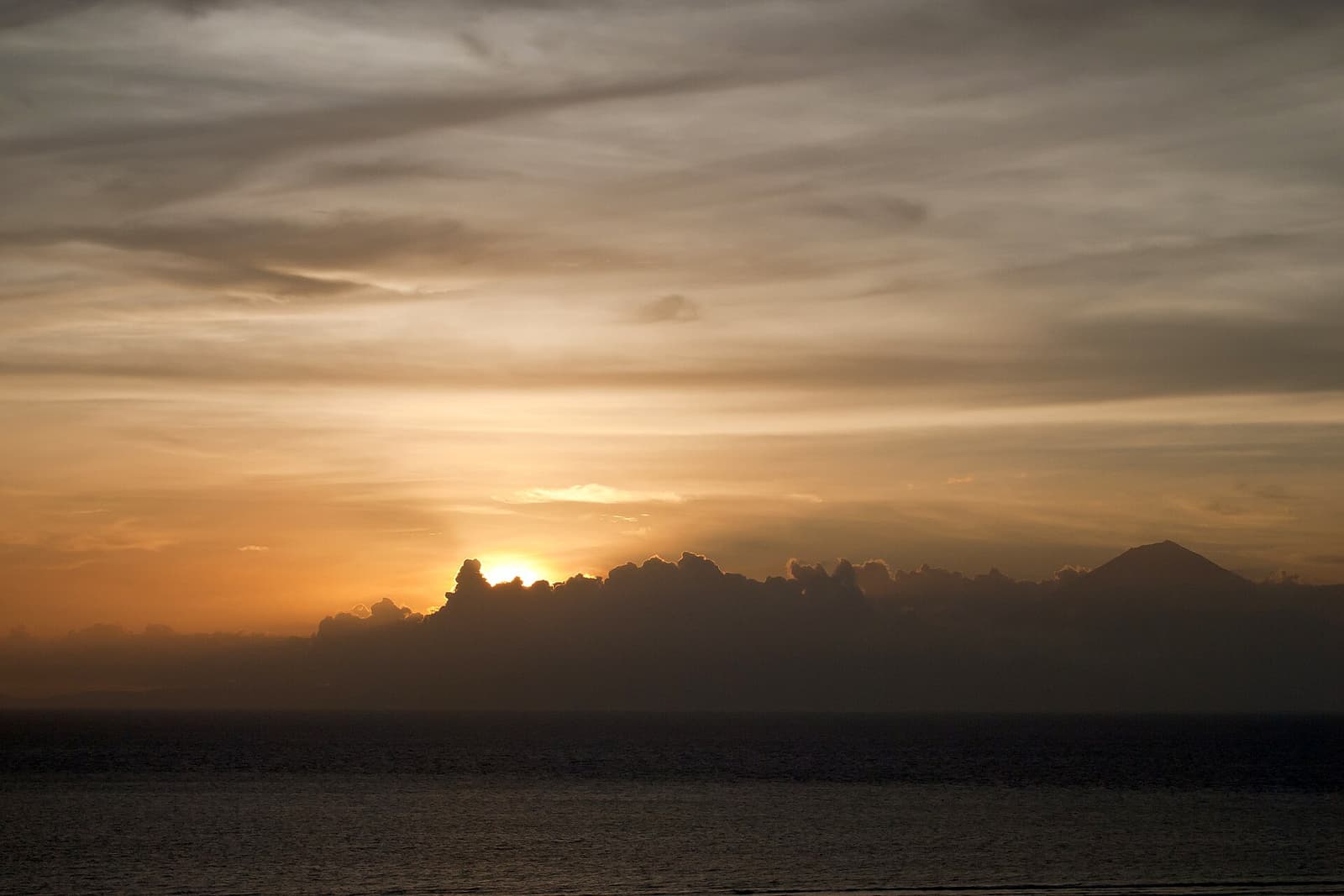
- Three small islands
- Before tourism
- From backpacker secret to global name
- The people and their customs
- The 2018 earthquakes in plain terms
- Is it safe now? What visitors should know
- Pressures on a small place
Three small islands
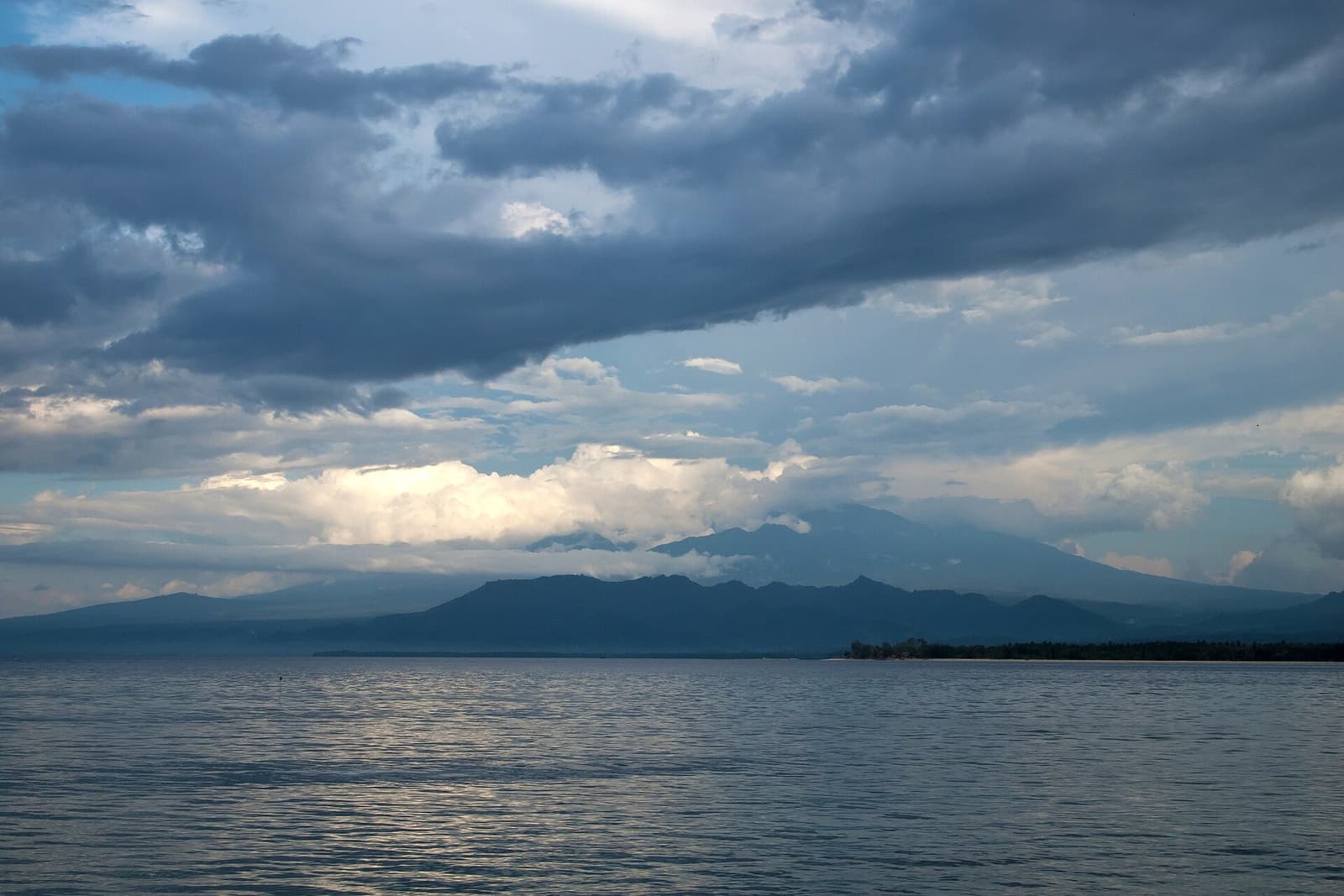
Gili is the Sasak word for a small island, so “Gili Islands” is a tautology that locals find mildly amusing. Lombok is surrounded by dozens of gilis; these three, administratively the village of Gili Indah in North Lombok regency, became “the” Gilis only because visitors found them first. In Indonesian tourism brochures they are sometimes called Gili Matra, from Meno, Trawangan and Air.
All three are low coral-and-sand islands sitting on a shared reef platform. Only Trawangan has a hill. None has a river, and only Air has much fresh groundwater — its name means “water”.
Before tourism
For most of history the islands had no permanent settlement: there was too little water. Fishermen from Lombok and seafaring Bugis and Mandar people from Sulawesi used them as seasonal camps. During the Second World War the occupying Japanese forces kept a lookout and gun position on Trawangan’s hill, traces of which remain, and a Japanese patrol vessel still lies on the seabed off the coast as a deep dive site.
Lasting settlement came in the decades after Indonesian independence. Families from Lombok and Sulawesi moved to Gili Air, then Meno and Trawangan, planting coconuts and fishing. Accounts of the 1970s describe attempts to establish coconut plantations on Trawangan, complicated by land disputes that echo to this day.
From backpacker secret to global name
The first foreign travellers arrived in the early 1980s, overland from Bali in search of somewhere quieter. They found bamboo huts on the beach for a dollar or two a night, no electricity and extraordinary reefs. Gili Air and Gili Meno drew the first visitors; Trawangan, the furthest out, followed and soon overtook them, gaining a reputation for parties that it has never entirely lost.
Diving shaped what came next. The first dive centres opened on Trawangan in the late 1980s and 1990s, and the islands grew into one of Asia’s main training grounds. In 2000 dive operators and community leaders set up the Gili Eco Trust to fund reef protection and to pay fishermen to give up destructive methods — an early local example of tourism paying for conservation.
Fast boats from Bali, introduced in the 2000s, changed the scale. A journey that had taken a day by ferry and bus now took two hours, and visitor numbers multiplied. Bungalows gave way to villas and resorts, particularly on Trawangan. Today the three islands together receive many hundreds of thousands of visitors a year, on a land area smaller than many city parks.
The people and their customs
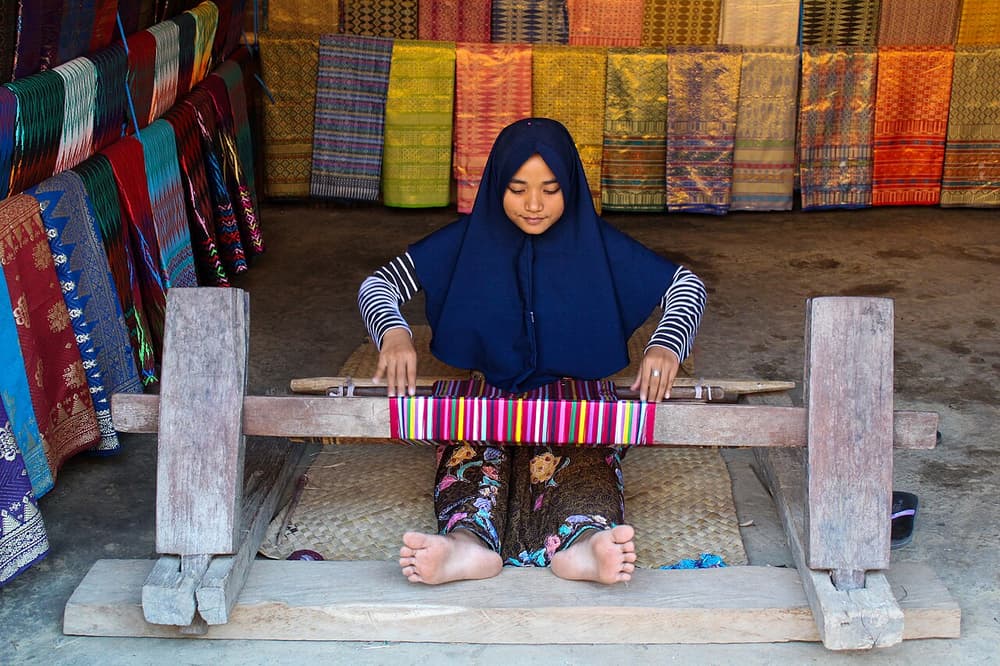
The islanders are mostly Sasak, the people of Lombok, together with families of Bugis and other descent. They are Muslim, and the mosque is the centre of each community. Island affairs are run by the village government and by customary rules known as awig-awig, community-agreed regulations that have governed fishing zones, the ban on motor vehicles and the protection of turtles and reefs. There was for many years no permanent police post; a village security force handled disputes in its own way.
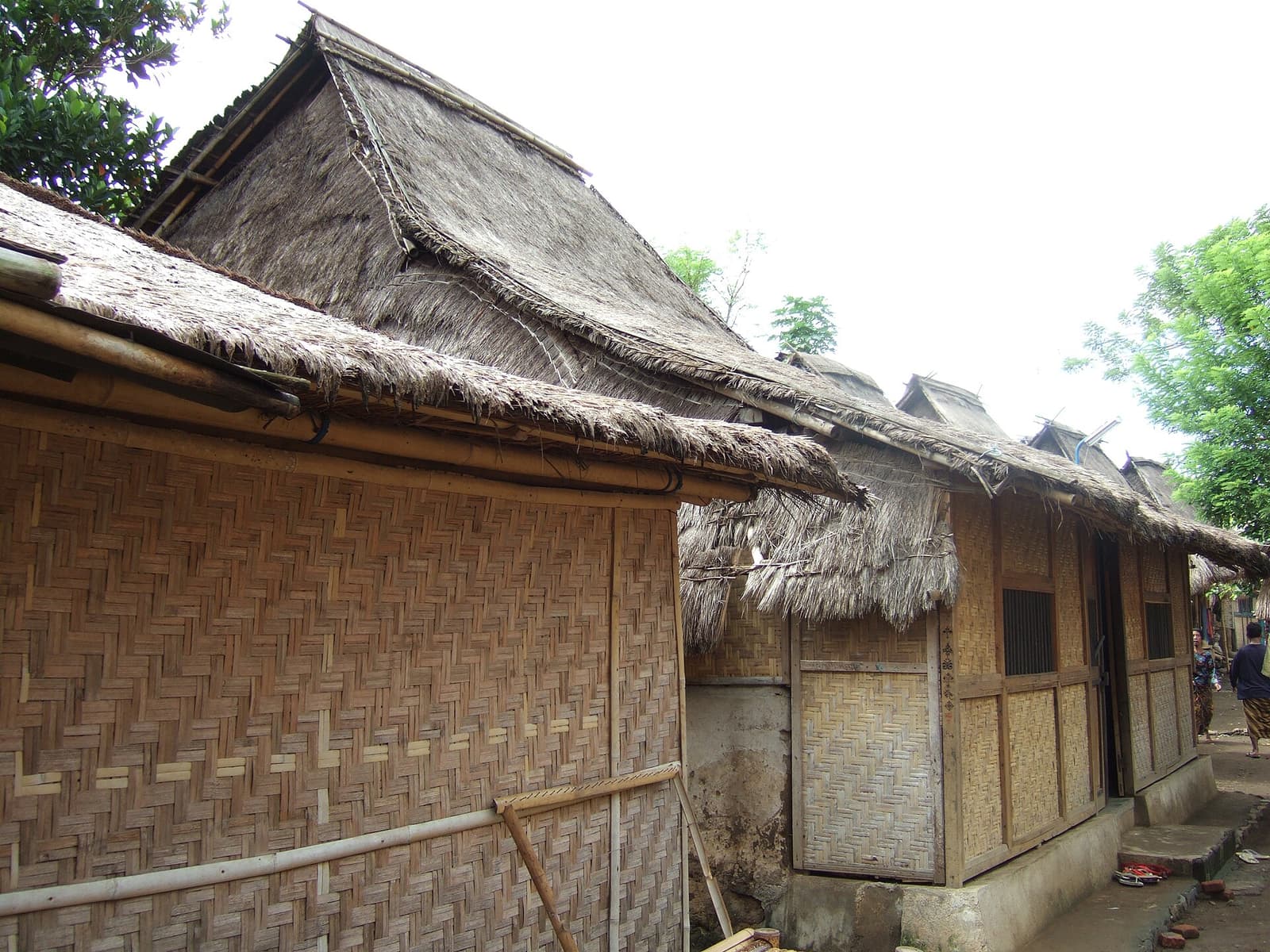
On the Lombok mainland you will meet more of Sasak culture: the thatched villages and bonnet-roofed rice barns of the south, backstrap weaving, the music of the gendang beleq big drums, ritual stick-fighting (peresean) and, in the north around Bayan, the Wetu Telu tradition, which blends Islam with older ancestral beliefs. Western Lombok was ruled for more than a century by Balinese kings, who left temples and water palaces around Mataram and a Balinese Hindu minority that remains part of the island’s life.
What this means for visitors is simple courtesy: cover up away from the beach, be considerate during Ramadan, and remember that the island behind the beach bars is somebody’s home. See our travel guide for practical etiquette.
The 2018 earthquakes in plain terms
In July and August 2018 a sequence of strong earthquakes struck northern Lombok. They were caused by movement on a fault system that runs beneath the sea north of the island — the Flores back-arc thrust — where the crust is being squeezed as tectonic plates converge.
| Date (2018) | Magnitude | Where | What happened |
|---|---|---|---|
| 29 July | About 6.4 | North-east Lombok, near Rinjani | Around twenty people killed, mostly in East Lombok. Landslides trapped several hundred trekkers on Mount Rinjani until they were guided down. |
| 5 August | About 6.9 | North Lombok | The main shock. Hundreds of deaths, overwhelmingly in North Lombok’s villages, and tens of thousands of homes destroyed. Felt strongly on the Gilis and in Bali. |
| 9 August | About 5.9 | North-west Lombok | A strong aftershock causing further collapses of already damaged buildings. |
| 19 August | About 6.3 and 6.9 | East Lombok | Two more large earthquakes on the same day, with further deaths and damage in the east. |
In total more than 500 people died on Lombok and several hundred thousand were displaced. The worst destruction was in the villages of North Lombok, directly opposite the Gilis, where unreinforced brick and concrete houses collapsed.
What happened on the Gili Islands
The 5 August earthquake struck in the evening. On the islands, buildings cracked and some collapsed, the power failed, and a tsunami warning — lifted after a short time, with only very small waves recorded — sent people to Trawangan’s hill and to open ground in the dark. A small number of people died on the islands. Over the following two days several thousand tourists and many residents were evacuated by boat to Lombok and Bali, in scenes of crowded beaches that were broadcast around the world.
Recovery
The islands were closed only briefly. Businesses began reopening within weeks, and by the following high season most were operating, many rebuilt in lighter timber and bamboo. Recovery was slower and harder in the mainland villages, where families lived in temporary shelters for a long time. Tourism’s return was one of the main sources of income for rebuilding — one reason islanders were anxious to welcome visitors back.
Under water, some reef structures and coral were damaged by the shaking, and restoration work has continued since.
Is it safe now? What visitors should know
Yes — in the sense that the islands function entirely normally and have done for years. But Lombok, like Bali, Java and most of Indonesia, lies in one of the most seismically active regions on Earth. Earthquakes cannot be predicted, and smaller tremors are felt from time to time. Sensible awareness is worth more than worry.
- If the ground shakes: move away from buildings, walls and trees into open ground. If you are indoors and cannot get out at once, shelter beside sturdy furniture and protect your head, then leave when the shaking stops.
- After a strong or long earthquake near the coast, move away from the beach to higher ground without waiting for a warning. On Trawangan that means the hill. Meno and Air are flat: go to the centre of the island, to the upper floor of a solid building, and follow local instructions.
- Notice the signs. Tsunami evacuation routes are marked on the islands. Take a moment on your first day to see where yours leads.
- Prefer single-storey timber or bamboo rooms if you are anxious; they are common, and behave better in earthquakes than heavy masonry.
- Keep essentials together at night — phone, torch, passport, shoes.
- Register with your embassy’s travel service if it offers one, and carry insurance.
- On Rinjani, follow your guide and the national park’s instructions without argument; routes are closed when there is risk.
Pressures on a small place
Success has costs. Fresh water, waste, coastal erosion, damaged shallow reefs and long-running disputes over land ownership — especially on Trawangan — are part of the islands’ story, as is the welfare of the cart horses described in getting around. None of this is a reason not to come. It is a reason to come thoughtfully: refill your bottle, keep your fins off the coral, spend money in locally owned places and leave the beach cleaner than you found it.