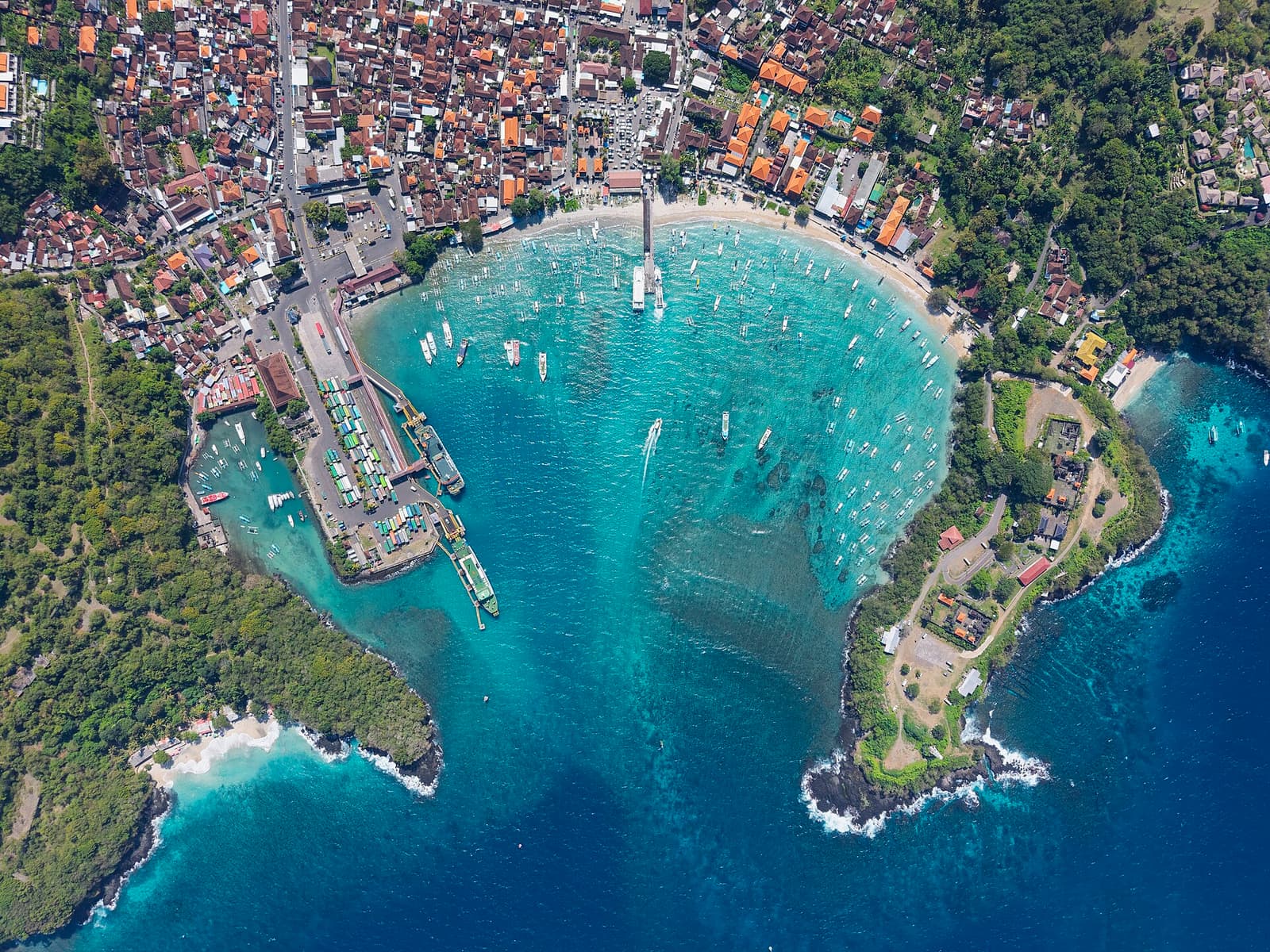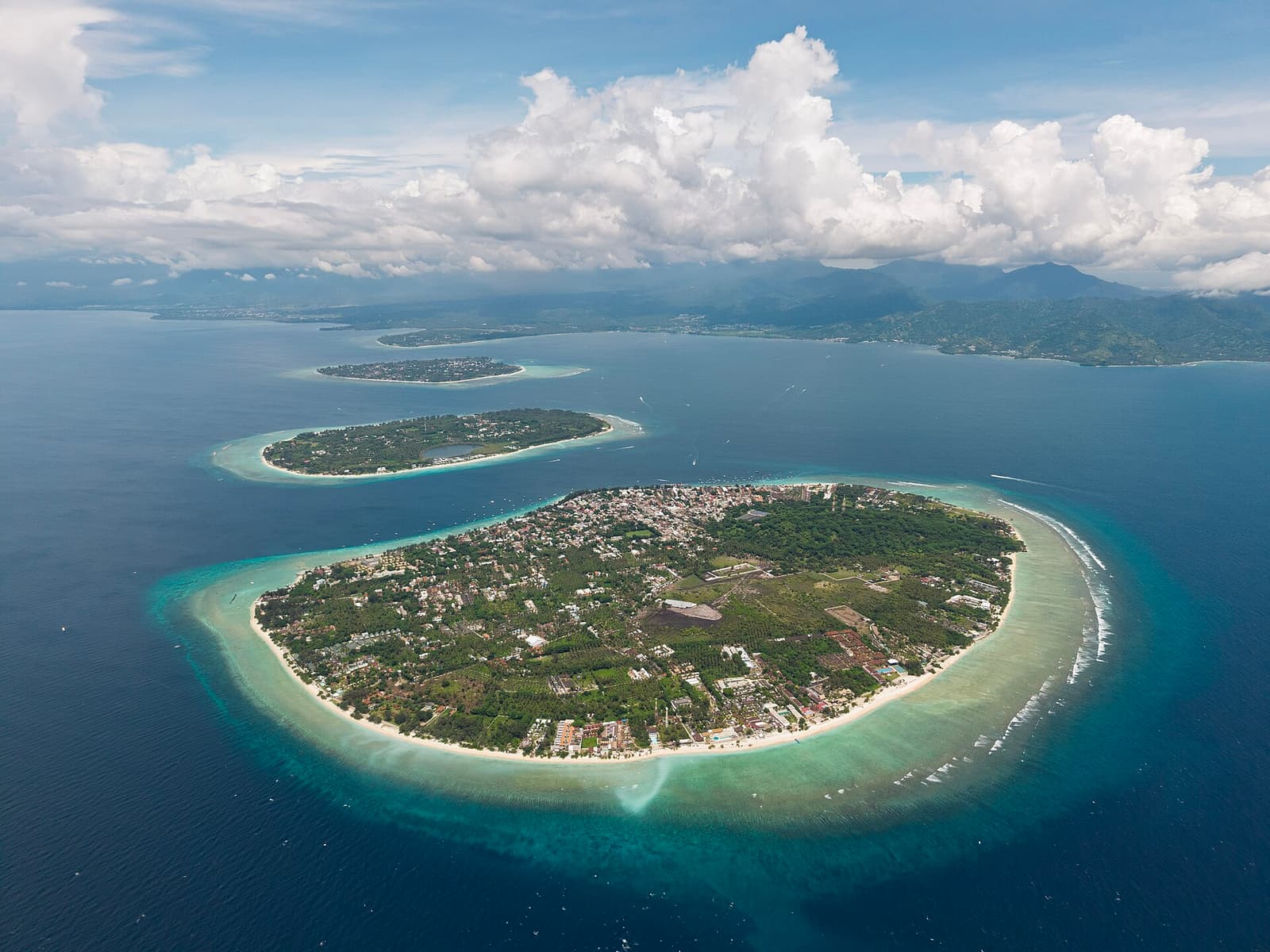
There is no airport and no bridge: everyone arrives by boat and wades or steps ashore near the harbour on the east coast. From Bali the usual route is a fast boat from Padang Bai, Serangan or Sanur, sold with or without a hotel pick-up. From Lombok you cross from Bangsal harbour or one of the private jetties at Teluk Nara and Teluk Kodek. Our region-wide fast boats & getting there guide compares the Bali departure points and explains sea conditions; this page covers Trawangan itself.
Times and fares below are typical, not guaranteed. Operators change their timetables with the season, and the harbourmaster stops all fast boats when the swell is too high — most often between December and February and on windy days in July and August. Build a spare day into any plan that ends with an international flight.
Routes at a glance
| From | Route | Time | Cost |
|---|---|---|---|
| Padang Bai (east Bali) | Direct fast boat; some call at Gili Air or Lombok first | About 1.5–2.5 hours on the water | From roughly €21–26 online; more with hotel pick-up |
| Serangan or Sanur (south Bali) | Fast boat, usually via Nusa Penida or Padang Bai | About 2.5–4 hours | Around €30 and up |
| Amed (north-east Bali) | Small fast boat, the shortest crossing | About 1–1.5 hours on the water | Usually dearer than Padang Bai; check |
| Nusa Penida / Lembongan | Direct fast boat, normally one sailing a day | About 2–2.5 hours | From about €21–26 online |
| Bangsal harbour (Lombok) | Public boat (leaves when full) or scheduled speedboat | 30–40 minutes / 10–15 minutes | A few tens of thousands of rupiah / around €15 online |
| Lombok airport (LOP) | Car to Bangsal or Teluk Nara, then boat | About 2–2.5 hours door to door | Private car-and-boat packages from around €16–35 per group online; check what is included |
| Gili Meno / Gili Air | Twice-daily island-hopping boat or private charter | 10–15 minutes to Meno, 20–30 to Air | A few euros on the public boat; charter by negotiation |
Getting around Gili Trawangan
On foot. The busy part of the east coast is barely a kilometre long. Most people walk everywhere and never need anything else.
By bicycle. The best way to see the rest of the island. Rental shops are everywhere; many hotels include bikes. Lights are rare, so carry a torch at night, and expect to push through sand in the north.
Electric scooters and e-bikes. A growing number of shops rent them, and some resorts use electric buggies for luggage. Ride slowly on the main strip, where pedestrians, children and horses share one narrow lane.
Horse carts (cidomo). The traditional island taxi, mostly used for luggage between the harbour and distant hotels. There are well-documented welfare concerns about the ponies. Our getting around guide explains the issue and how to decide; if your hotel is far from the harbour, ask whether it can send a porter with a handcart or an electric buggy instead.
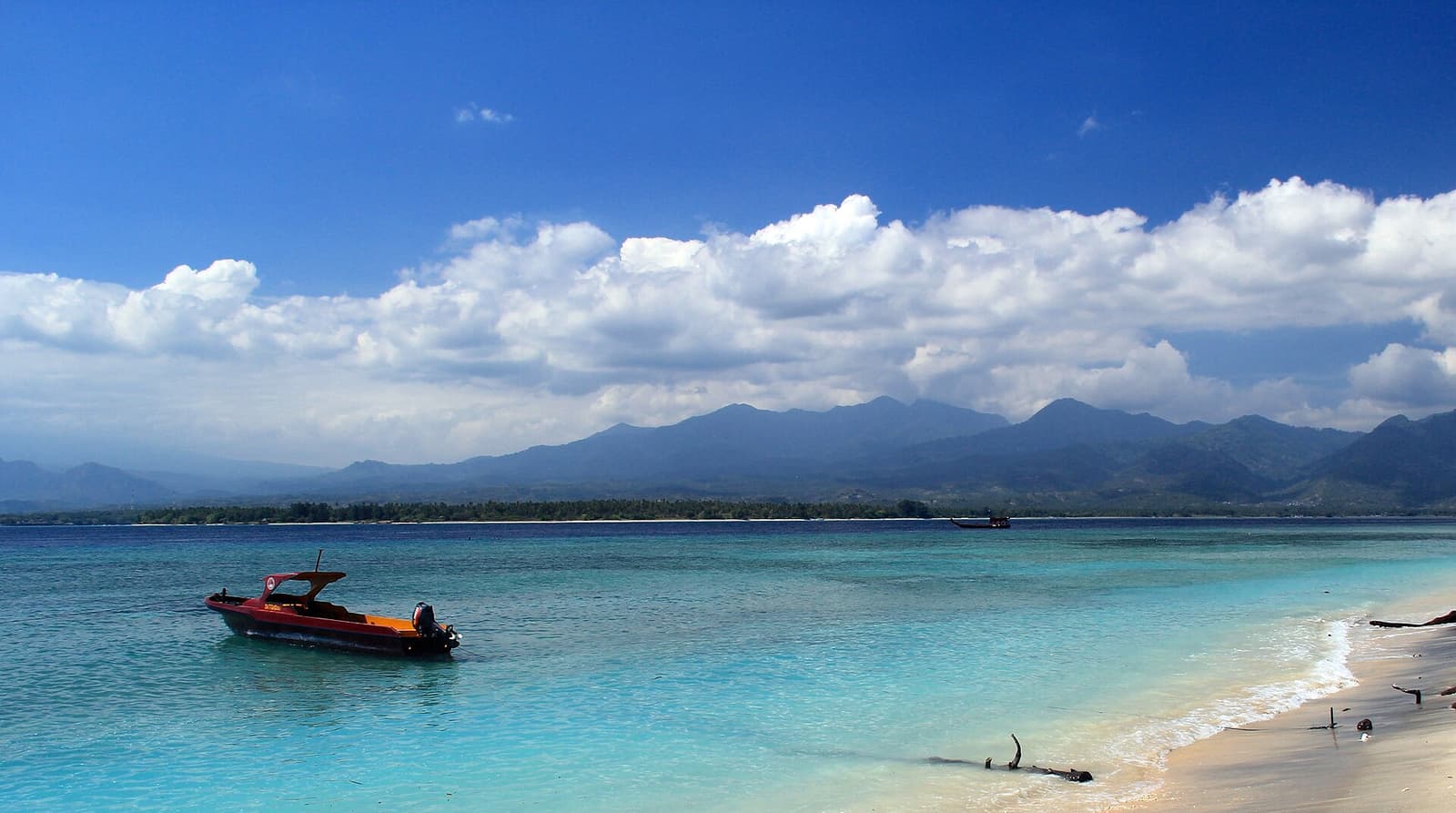
Arriving. Boats nose onto the beach or the jetty beside the harbour office. Expect to get your feet wet, keep electronics in a dry bag, and watch your own luggage come off the boat.