Areas of the island
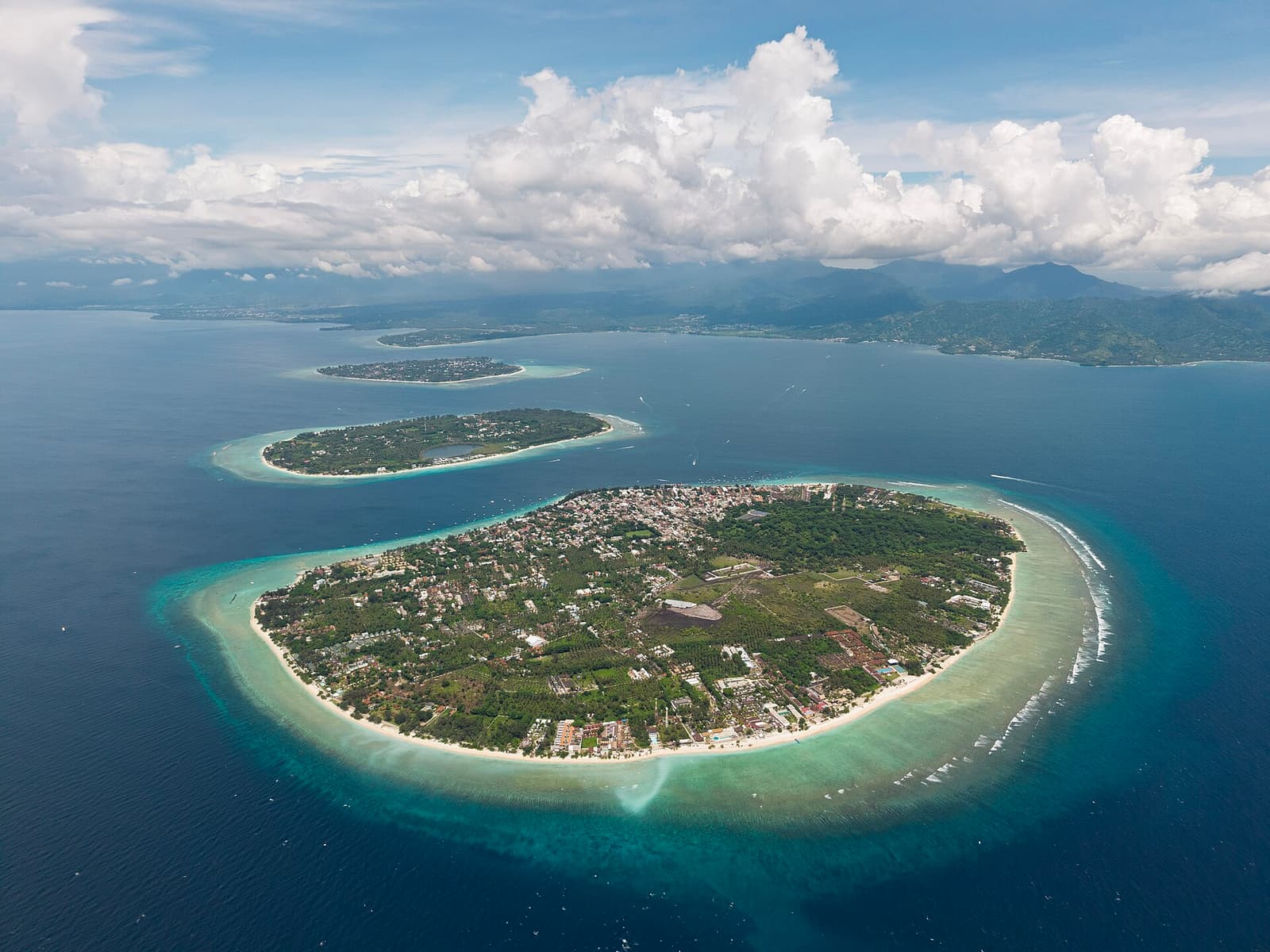
South and south-east: the harbour side
The most developed stretch, though “developed” here means a sandy lane of cafés, dive shops, yoga studios and mini-markets. Convenient for boats and classes, with plenty of mid-range rooms. A few bars have live music; it is rarely loud after midnight.
East coast
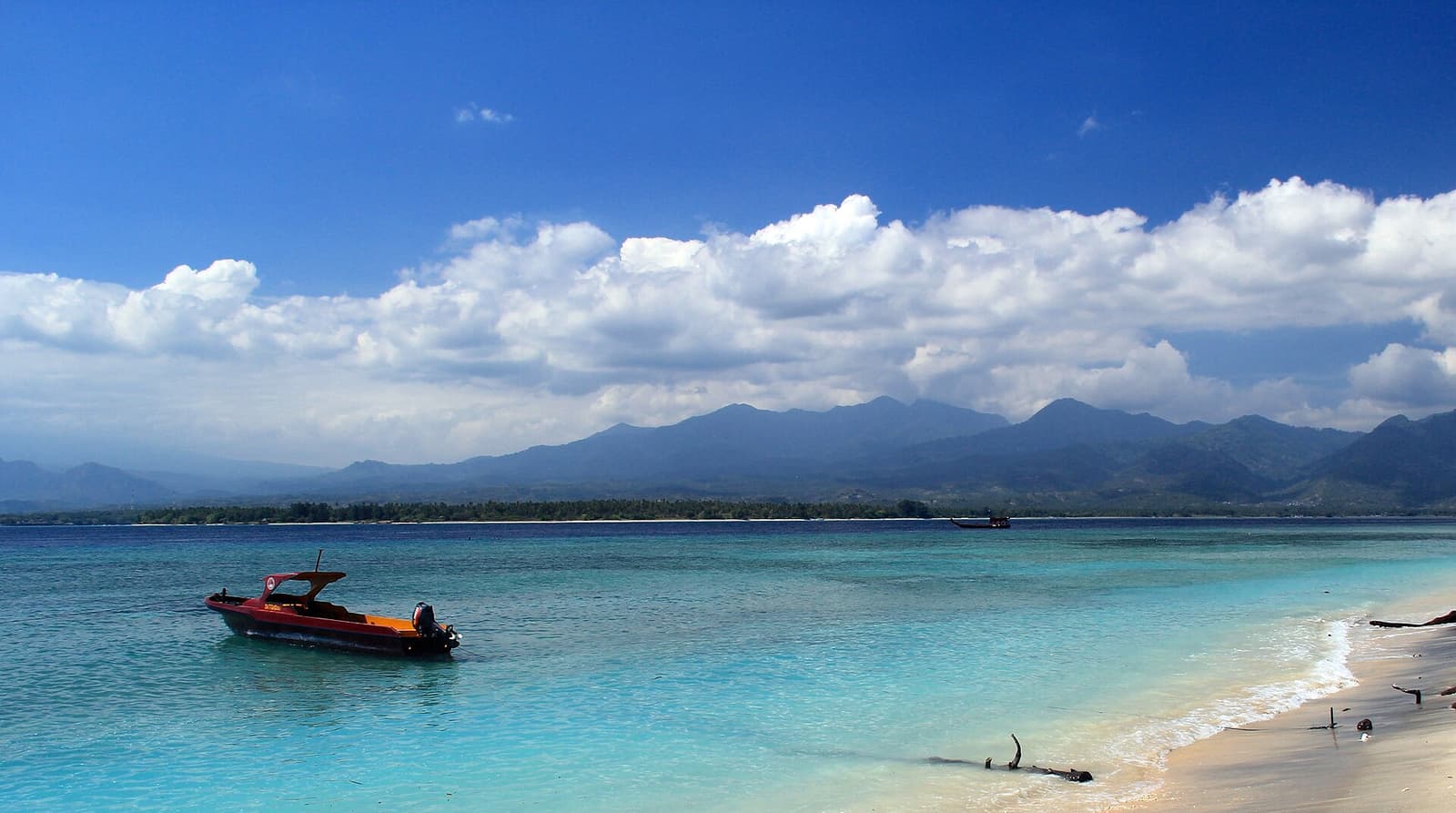
The classic Gili Air scene: restaurants with shaded platforms on the sand, loungers, and the reef a few steps away. Best for snorkelling from your doorstep and for views of Lombok.
West and north-west
More space between properties, bigger skies, sunset every evening. The swimming is poor at low tide and the path is soft, but this is the side for seclusion.
North and the interior
The north is breezy and quiet with Rinjani views. Inland are homestays, private villas and the village itself — cheaper, shadier and a short walk from any coast.
Eating and drinking
Gili Air has the best food-to-size ratio in the Gilis: village warungs with rice-and-curry plates, fresh fish grilled on the beach, good coffee, bakeries, and a strong line in vegetarian and vegan cafés. Try Lombok’s ayam taliwang and the peanut-dressed vegetable salad gado-gado; ask for less chilli if you are cautious.
Drink beer or sealed, branded spirits. Avoid very cheap cocktails and unlabelled local arak — methanol poisoning is a known risk across the region.
Yoga, freediving and classes
Several studios run daily drop-in yoga in open-air shalas. Freediving schools teach from one-day introductions to multi-day courses in the deep channel just offshore. Cooking and silver-smithing classes are listed on our tours page.
Money and connections
There are a handful of ATMs, mostly near the harbour. They work most of the time, but not always with every foreign card, and they can run dry in peak weeks: arrive with a cash reserve. Cards are accepted by larger hotels, dive centres and some restaurants, usually with a surcharge. Mobile data is reliable.
Water and waste
Air has its own groundwater, but tap water is still not for drinking. Refill a bottle at cafés and hotels that offer it. Take batteries and other hazardous rubbish back to the mainland if you can.
Safety and health
- Currents in the channels to Meno and Lombok are strong. Stay inside the reef edge and do not snorkel alone at dusk.
- Boat traffic is heavy near the harbour. Swim and snorkel away from it.
- Clinics on the island handle cuts, stomach bugs and ear infections. For anything serious you will be taken to Lombok; carry insurance that covers evacuation and, if relevant, diving.
- Earthquakes. Gili Air is flat and was affected in 2018. Read our plain account in History, culture & the 2018 earthquakes.
Respect
You are staying beside a Muslim village. Cover shoulders and thighs when you leave the beach, keep swimwear for the sand, and be discreet with food and drink in village lanes during the daylight hours of Ramadan. A smile and a “selamat pagi” go a long way.
Sample plans
One day
Walk the loop clockwise after an early coffee, stopping to snorkel the east-coast reef at mid-tide. Long lunch on a platform over the sand, a siesta, then cross the island through the village to the west coast for sunset and dinner by firelight.
Two days
Day one as above. On day two join a morning snorkelling boat to the turtles and the Meno statues, come back for a late lunch, and take a cooking or silver class in the afternoon.
Three to five days
Add a day on Gili Meno by public boat, a try-dive or two fun dives at Han’s Reef, a sunrise walk to the north-east shore and a day trip to the Senaru waterfalls on Lombok. Leave one day completely empty.