Which route?
Senaru crater rim (1–2 days)
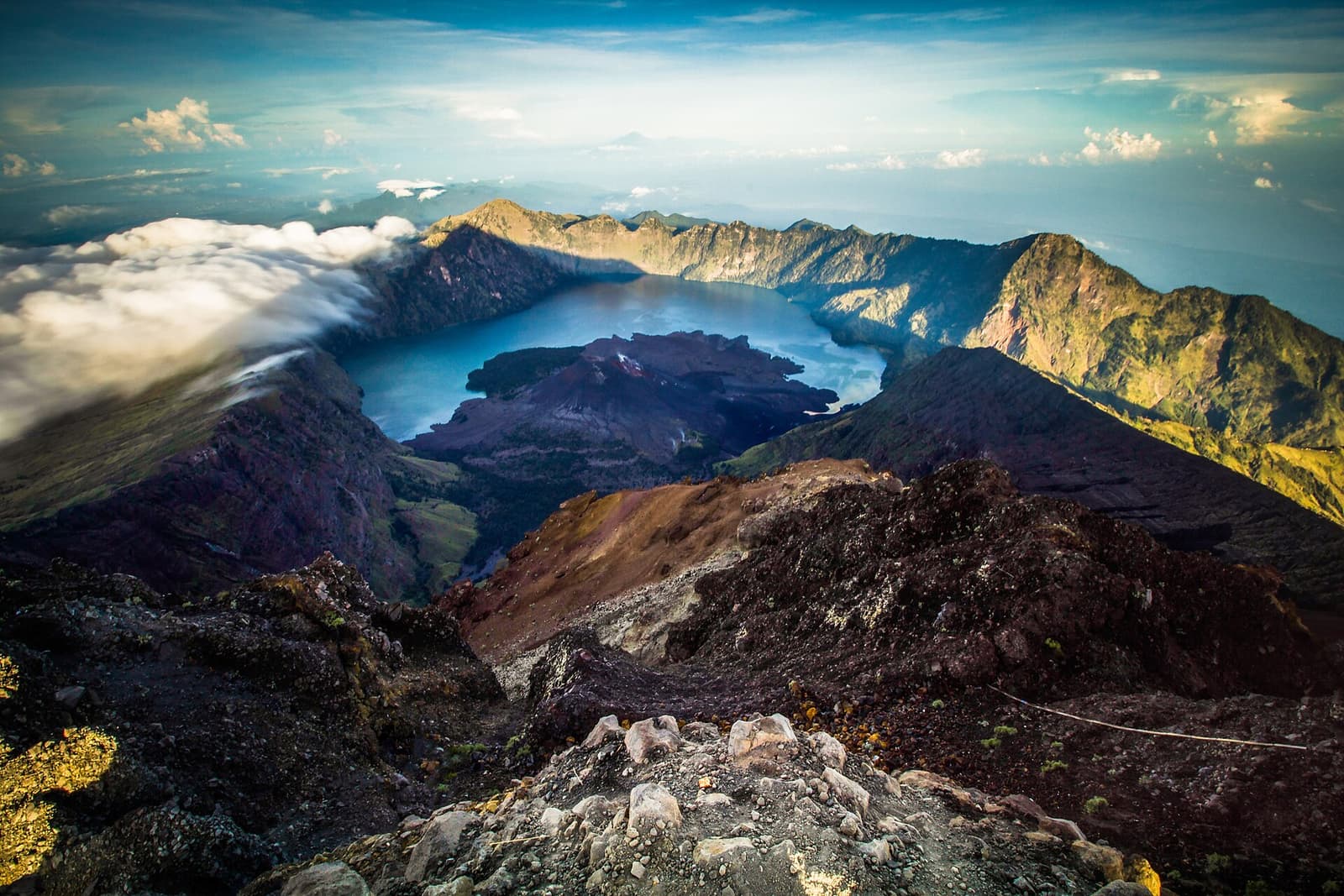
Starts at about 600 metres and climbs through shady rainforest, then steep grassland, to the northern rim. Hot and humid low down, but the gentlest introduction to the mountain and the finest single view. No summit.
Sembalun to the summit (2 days)
Starts higher, at about 1,150 metres, across open savanna with little shade, then a hard climb to the Sembalun rim camp. The summit attempt begins around 2 am. Fast, tough and the most popular way to the top.
Summit, lake and out (3–4 days)
Up from Sembalun, summit at dawn, down to Segara Anak and the hot springs, then out over the Senaru rim or down the dramatic Torean gorge. The complete journey, with time to enjoy it.
Rules, permits and closures
Rinjani is a national park. Entry is by permit, booked through licensed operators using the park’s online system, and a licensed guide is compulsory; daily numbers are capped on each route. The trails normally close for the height of the rainy season, roughly January to March, and the park has tightened safety rules in recent years after serious accidents. Requirements can change, so rely on a reputable operator for the current position.
What to pack
- Broken-in boots or grippy trail shoes, and sandals for camp
- Warm jacket, fleece, hat and gloves; a windproof layer for the summit
- Head torch with spare batteries
- Sun hat, sunglasses and high-factor sunscreen
- Trekking poles (often available to rent)
- A buff or mask for dust, blister plasters and any personal medication
- Cash for tips: guides and porters work extremely hard
Safety
- The summit ridge is exposed and narrow in places. Stay with your guide, do not wander at the edge for photographs, and turn back if you are exhausted or the wind is dangerous.
- Altitude is moderate, but headaches and nausea are common on the summit push. Drink plenty and go slowly.
- Rinjani is an active volcano. Barujari erupted most recently in the 2010s, and earthquakes in 2018 triggered landslides that trapped hundreds of trekkers. Follow park instructions without argument.
- Rescue is slow. There is no helicopter service on standby. Carry insurance that covers trekking and evacuation.
Senaru without the trek
A half or full day gives you both waterfalls, a walk through rice terraces and cocoa and coffee gardens with a village guide, the traditional compound and lunch on a terrace looking down to the sea. Bring swimwear, a towel and shoes that can get wet.
Food and money
Guesthouse restaurants serve simple Indonesian food; on the mountain, cooks produce remarkable meals on a single burner — fried rice, noodle soup, banana pancakes, fresh pineapple. There are no dependable ATMs in Senaru or Sembalun: bring cash from Mataram, Senggigi or the Gilis.
Respect
The mountain is holy ground. Carry out everything you carry in, use the toilet tents provided, do not swim naked in the lake or springs, and dress modestly in the villages.
Sample plans
One day: waterfalls from the Gilis
Early boat to Bangsal and a driver along the north coast to Senaru. Walk down to Sendang Gile, on to Tiu Kelep for a swim, lunch with a view, the traditional village and Bayan’s old mosque on the way back. Last public boat or a pre-booked speedboat home.
Three days: crater rim
Day one: travel to Senaru, see the waterfalls in the afternoon and sleep early. Day two: climb to the Senaru rim and camp above the lake. Day three: sunrise, descend by midday and transfer to the harbour or a beach hotel.
Four to five days: summit and lake
Night in Sembalun; day one to the Sembalun rim; day two summit at dawn and down to the lake and hot springs; day three out via the Senaru rim or Torean. Follow with two lazy days on Gili Air or Gili Meno.